Showing posts with label anthocyanins. Show all posts

June 3, 2023

What are the roles of anthocyanin?

Anthocyanins, a branch of flavonoids, have many biological functions in higher plants. They provide a variety of colors for plants acting as insect and animal attractants. They also serve as important molecules in defense against UV irradiation, pathogen infection and ROS scavenging. Anthocyanins accumulate in the vacuoles of a wide range of cells and tissues in both vegetative and reproductive organs.

Anthocyanins (from Greek anthos – flower and kyaneos - blue) are plant low molecular weight compounds, defined as secondary metabolites, meaning dyes are not essential for the primary metabolism. The word ‘anthocyanin’ dates back to 1835 when Marquart first coined this term in the paper, “Die Farben der Bluthen,eine chemisch-physiologische Abhandlung”.

The red-to-purple color imparted by anthocyanins to flowers, fruits, and seeds act as visual deterrents to herbivores, and attractants to pollinators and seed dispersers. Anthocyanins and other flavonoids also contribute to stress tolerance in plants.

These compounds are water soluble vacuolar pigments present mostly in fruits and flowers, but also in vegetative organs. They have a strong impact on food sensory properties, as they provide the characteristic red to blue color in fruits and vegetables. In plants, they play a key role in pollination and by absorbing light, protect plants from UV ray-induced damage and from cold stress.

Protection of photosynthetic apparatus: Anthocyanins protect leaves from the stress of photoinhibitory light fluxes by absorbing the excess photons that would otherwise be intercepted by chlorophyll b.

Anthocyanins are excellent scavengers of free radicals. Anthocyanins show antioxidant activity by scavenging free radicals, activating antioxidant enzyme, and chelating metal ions,

There are several different ways anthocyanins might assist plants in their defense against other organisms. These include both direct roles as chemical repellents and more indirect roles as visual signals. In common with other flavonoids, certain anthocyanins have demonstrable antiviral, antibacterial, and fungicidal activities.

If plants lacked anthocyanin, no part of the plant would display purple or blue color. The main function of the anthocyanins, contained in flowers or in fruit epidermis, is to attract animals and pollinating insects to easily disseminate the seeds or to facilitate the spread of pollen. These processes will be affected due to lack of anthocyanin.
What are the roles of anthocyanin?

January 5, 2022

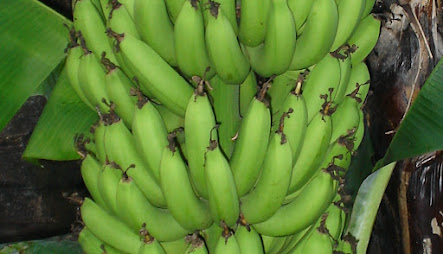
Anthocyanins in banana

Banana, an ancient fruit crop has reported that the important bioactive components include alkaloids, flavonoids, tannins and phenolic compounds. There are more than 8000 phenolics, 25000 terpenoids and 12000 alkaloids.

Ripened banana peel contains various types of compounds such as anthocyanins, delphinidin, cyaniding, and catecholamines.

Anthocyanin is one of the main sources for the attractive blue-violet-red-orange color of flowers and fruits and they have high color intensities to attract animals and thus promoting pollination and dispersion of seeds. Flavonols can interact with anthocyanins to modify the color of fruits and play a prominent role in protection against UV-B irradiation.

Anthocyanins (Greek anthos: flower and kyaneos: dark blue) represent a subclass of the phenolic compounds.

Anthocyanins are water-soluble glycosides of anthocyanidins compounds that provide color to plant tissues (leaves, stems, roots, flowers and fruits) ranging from red, purple to blue according to the environmental pH and their structural composition.

In general, anthocyanins are non-photosynthetic pigments synthesized in the cytoplasm and stored in the vacuolar lumen of epidermal cells.

Anthocyanins not only play an important role in reproduction, by attracting pollinators and seed dispersers, they also have function in protection against various abiotic and biotic stresses.

Anthocyanins are neuroprotective, anti-obesity and anti-diabetic. They also inhibit the growth of malignant cancerous cells, with anti-inflammatory and cardiovascular protection capacities.
Anthocyanins in banana

May 10, 2019

Anthocyanins

Anthocyanins are the largest group of water-soluble pigments in the plant kingdom and belong to the family of compounds known as flavonoids that are synthesized by plants as part of their secondary metabolism. Based on their chemical characteristics, flavonoids are divided into different subclasses: flavonols, flavanols, anthocyanidins, flavanones, flavones and isoflavones.

Anthocyanins are colored water-soluble pigments belonging to the phenolic group. They occur primarily as glycosides or acylglycosides of their respective aglycone anthocyanidins. These pigments, naturally present in fruits and vegetables, provide color and promote health benefits to consumers due to their antioxidant capacity.

The different anthocyanin conjugates absorb light at about 500 nm and are responsible for the red, blue and purple color of fruits and vegetables.


Among the anthocyanin pigments, cyanidin-3-glucoside is the major anthocyanin found in most of the plants. The colored anthocyanin pigments have been traditionally used as a natural food colorant. The color and stability of these pigments are influenced by pH, light, temperature, and structure.

Anthocyanins have important functions in plant physiology. They are believed to play a major role in both pollination and seed dispersal. Anthocyanins have been shown to be strong antioxidants and may exert a wide range of health benefits through antioxidant or other mechanisms. Several studies have shown that anthocyanins display a wide range of biological activities including antioxidant, anti-inflammatory, antimicrobial and anti-carcinogenic activities.
Anthocyanins

November 1, 2018

Mango fruits with anthocyanins

Chlorophyll, carotenes, anthocyanins and xanthophylls are principal pigments present in the mango.

High content of anthocyanins is present in the ripened mango peel, whereas unripened mango peels contain more polyphenol constituents.

It was reported the presence of anthocyanins in the mango peel in the range from 203 to 565 mg/100 g (dry matter), depending on variety and stage of maturity.

Loss of green skin color is one of the common characteristics of ripening in many mango cultivars. Some cultivars show reddish blue skin color due to presence of anthocyanins.

These skin color changes are due to the disappearance of chlorophyll and the appearance of other pigments (carotenoids and/or anthocyanins).
Mango fruits with anthocyanins

December 21, 2015

Anthocyanins in cherries

The red pigments in fruits are basically flavonoids, occurring as water soluble glycosides, mainly formed from glucose, rhamnnose, arabinose, galactose and xylose, either as mono or disaccharides.

Sweet cherries are one of the most popular spring-summer fruit species and mainly consumed as a fresh table fruit. It is known that sweet cherry have a various antioxidants and one of its major phenolic antioxidant is anthocyanins. In fact, anthocyanins show one of the strongest antioxidant activities among phenolic compounds.

Anthocyanins are responsible for the red, blue and purple color of some flower and fruits and have been described as potent antioxidants.

Anthocyanin accumulation in the skin and flesh of red cherries begin several weeks before harvest. The ripening in process is characterized by color changes, from green to red which are due to accumulation and prolife of anthocyanins. Red color intensity in sweet cherry is used as an indicator of quality and ripening of fresh sweet cherry.

The anthocyanin content of cherries is compared to that of other plants foods evidence has suggested health –promoting effects related to their anthocyanin content.

A study has demonstrated a positive linear relationship between the level of anthocyanins in cherries and the degree of protection from oxidative stress in neuronal cells (J. Agric Food Chem 199;47: 840-4).

The amount of anthocyanins varies widely between types of fruits. Even though level of anthocyanin in tart cherries have been found to exceed those in sweet cherries and other fruits sweet cherries, particularly Jerte Valley cherries, have been reported to present melatonin precursors – molecules with potent antioxidant activity – which may contribute to an increase in the potential biologic properties of these cherries.
Anthocyanins in cherries

July 23, 2015

What are betalains?

Betalains are a group of pigments found in red beet and to some extent, in cactus fruits, pokeberries and a number of flowers (bougainvillea). More than 50 naturally occurring betalains are known.

The pigments are red and yellow and resemble the anthocyanins and flavonoids in an appearance. However the betalains contain nitrogen.
 
As with anthocyanin, betalains are present in flowers or fruits and may play a role as attractants for vectors in the pollination process and in seeds dispersal by animals.
Basic structure of betalains
The term ‘betalains’ was introduced by Mabry and Dreiding in 1968. They are immonium derivatives of betalamic acid.

Betalains have been proposed as a defense mechanism because they are accumulated when tissues are injured. Moreover, their appearance occurs in association with antifungal proteins in some plants.

The betalains are stable in the pH range 4-6 and they are subject to degradation by thermal processing as in canning.

Within these limitations, betalains are ideally used to color products have a short shelf life, are packaged to reduce exposure to light, oxygen and high humidity, do not received extended or high heat treatment and are marketed in the dry state.

Despite these limitations, betalains have been suggested for coloring ice cream, yoghurt, cake, mixes, gelatin, desserts, meat substitutes, gravies, frostings and many others.
What are betalains?

May 21, 2015

What is anthocyanidin?

When the sugar moiety of an anthocyanin is hydrolyzed, the aglycone (non-sugar hydrolysis product) is referred to as an anthocyanidin.

The color of anthocyanins and anthocyanidins results from excitation of molecule by visible light. At pH values lower than 3, the anthocyanidin appears as the red flavylium cation, and at pH values higher than 6 it is preset as the blue quinonoidal base form.

The richest sources of anthocyanidins to the diet are red wine and fruit, particularly berries. Foods can have one or a variety of anthocyanidins and the concentration is influenced by environmental conditions, ripeness, cultivar, cultivation site, processing and storage.

Only three types of anthocyanidins have been identified in plant tissues. Pelargonidin, cyanidin and delphinidin are wide spread in nature with cyanidin the most common.

Cyanidin is the anthocyanidin found in red cabbage, pelargonidin occurs in radishes and red-seeded varieties of bean and delphinidin occurs in aubergines.

Anthocyanidins are less water soluble than their corresponding glycosides (anthocyanins) and they are not found free in nature.

Freezing may be the best method of preserving anthocyanidins in foods so as the consumption can continue throughout the year even when particular foods such as berries are not in season.
What is anthocyanidin?

The Most Popular Posts